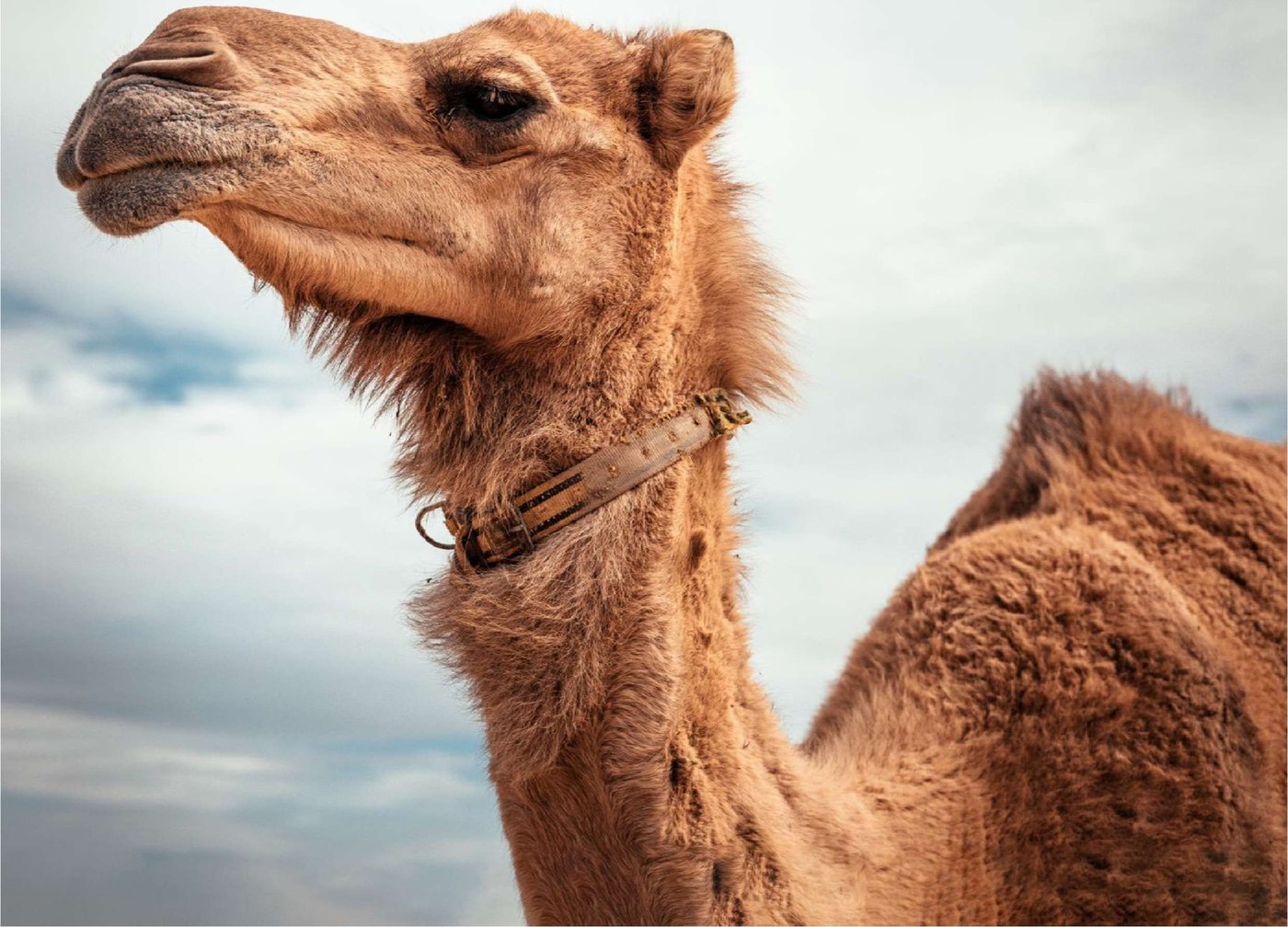
For camel owners in the Gulf, North Africa, the Horn of Africa and Central Asia, feed is a water problem first. Every bale of hay or alfalfa that arrives at the yard carries an enormous amount of water that was used somewhere else to grow it, and the price of that bale rises with drought, freight and import costs. Racing stables, camel dairies and breeding operations all face the same question: how do you put fresh, consistent forage in front of every animal, every day, without depending on rain, pasture or a long supply chain?
The water math
Greenfield Hydroponics grows fodder indoors on recirculated water. According to Greenfield materials, producing one ton of conventional field fodder takes around 270,000 liters of water. Producing one ton of hydroponic green forage takes about 660 liters.
The system itself is a controlled room: aluminum racks, food-grade trays, drip and flood irrigation with an atomizer nebulizer, full-spectrum LED lighting and a PLC that runs the cycle on a fixed schedule. Seed goes in at one end of the week and a fresh mat of sprouted forage comes out at the other, every day of the year.

What camels gain
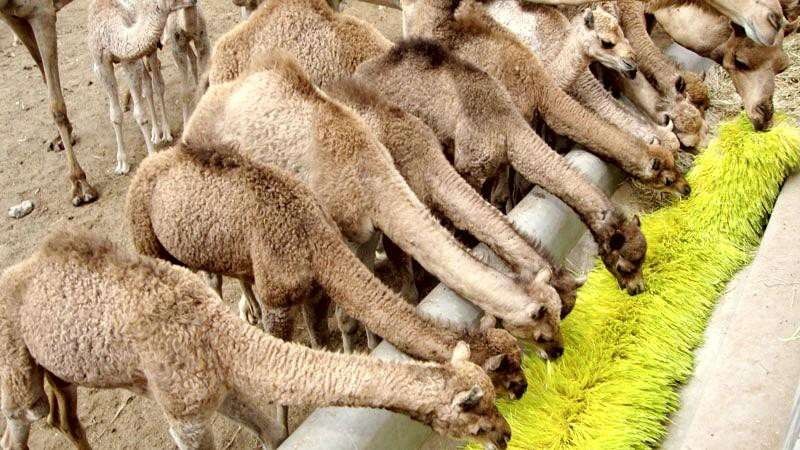
Fresh hydroponic forage is grown without soil or agrochemicals. It is highly digestible and rich in live enzymes, proteins, vitamins and minerals such as calcium, phosphorus and magnesium, which matter for immune function and milk production. With roughly 80% natural moisture, it also helps keep animals hydrated in arid climates.
Operators feeding Greenfield fodder report:
- Improved racing performance and faster recovery after exertion
- A better coat and overall appearance
- Lower incidence of colic and intestinal ulcers, and lower veterinary costs
- Gentler, calmer animals
- Lower feed bills, with Greenfield materials citing savings of up to 70%
Hydroponic fodder works best as a fresh component of a balanced ration, set with qualified animal-nutrition advice, rather than as a replacement for every feed in the program.
Energy that counts
Laboratory reports often show the energy values of hydroponic green forage (FVH) as equal to, or slightly below, the original seed. That makes sense, since some energy fuels germination. But those values are calculated, and they rarely reflect how digestible and available the energy is. Measured energy digestibility in FVH is much higher, so the animal spends little metabolic energy unlocking it and gets more net energy for work, growth and milk than it would from the dry grain.
Measuring what each camel eats
Feeding better is only half the story. The other half is knowing it worked. The Camel Smart Monitoring System uses the same platform developed for our horse program, fitted for camels:
- Camel Core collar. A light, 2.6 oz capsule built on the Equine Core hardware rides high on the neck, facing the sky for strong GPS. A 6-axis motion sensor records activity, feeding and rest around the clock. The strap is a longer, soft-lined, camel-length version with a breakaway link.
- Smart Feed stations. Feeders with built-in load-cell scales record how much each camel removes, matched to the camel at the feeder.
- Built-in connectivity. LTE-M / NB-IoT cellular means no antennas or gateways across the range. Out of coverage, the collar stores 72+ hours of data and syncs when back in range. Geofences help keep track of free-ranging herds.
- Per-camel baselines. The platform learns each animal's normal pattern and flags meaningful changes in appetite, activity or rest, with a plain-language explanation of what changed.
Put together, the collar and feeder let an operator compare hay, alfalfa, pellets and fresh hydroponic fodder by what each camel actually consumed, not just what was put out. That closes the loop between what the Greenfield system grows and what each animal eats.
Who it's for
- Racing stables and trainers: condition, rest and recovery after exertion, with documented feeding.
- Camel dairies: per-animal intake and activity alongside the milk program.
- Breeders and herders: early warning and geofences for herds spread across wide ranges.
- Veterinarians: objective activity, rest and intake history between visits.
Next steps
Every Greenfield fodder system is sized to the herd and the daily ration. Tell us how many camels you feed and how much forage you need per day (kg or lbs), and our engineering team will prepare a complimentary preliminary proposal, with monitoring included if you want it.
See the Camel Fodder page → · Download the Camel Smart Monitoring Executive Overview →
The Camel Smart Monitoring System is in development (prototype); specifications are design targets pending testing and certification for camel use. Alerts are behavioral observations, not veterinary diagnoses. Fodder figures are from Greenfield Hydroponics materials; actual results depend on seed, conditions and ration.