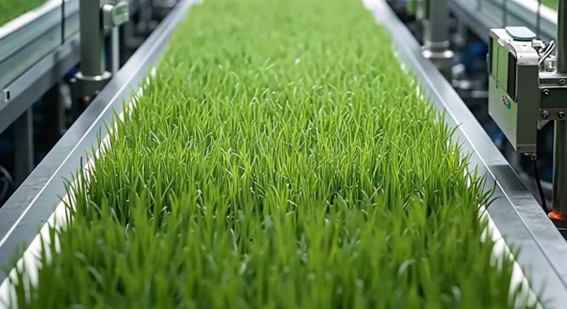
Controlled Environment Agriculture — CEA for short — is the technology that lets Greenfield grow food indoors, in sealed rooms tuned to whatever conditions a given crop needs, independent of the weather or the calendar outside. It covers everything from sealed greenhouses to fully enclosed vertical farms, and it's the foundation underneath every Greenfield installation.

The four systems doing the work

Four core technologies combine to make CEA function:

  • Hydroponics — soil-free cultivation using optimized nutrient solutions delivered straight to the root zone.
  • LED lighting — full-spectrum light tuned to mimic sunlight and drive optimal plant development on a schedule the grower controls, not the sun.
  • Environmental control — continuous monitoring and regulation of temperature, humidity and CO₂ levels.
  • Automation — intelligent systems that manage irrigation and nutrient dosing without a human checking a valve by hand.

What that buys a grower

The headline numbers are the ones that get repeated for good reason: up to 95% less water than open-field farming, and 365 days of harvest a year regardless of season. But the less obvious benefits matter just as much — produce with seed-to-shelf traceability and no pesticide residue, and crops grown beside the point of sale, which cuts transport miles down to nearly nothing.

Two shapes, one platform

Within CEA, Greenfield deploys two main growing formats depending on the crop. Vertical towers maximize space utilization in a vertical footprint, ideal for tomatoes, leafy greens and microgreens. Vertical channels offer a more versatile structure for a wider range of vegetables with efficient built-in irrigation. Both draw from the same underlying toolkit — and from a crop list that runs well past 200 vegetable, herb and flower varieties, from lettuce and kale to basil, strawberries and edible flowers like nasturtium and pansy.

Why it adds up to a different kind of farming

Traditional agriculture is built around what a piece of land and a season will allow. CEA flips that: the environment gets built around what the crop needs, which is what makes it possible to put a working farm inside a repurposed warehouse, a shipping container, or a corner of a residential development — and still get a harvest every single day of the year.