Animal Fodder › Camel Fodder
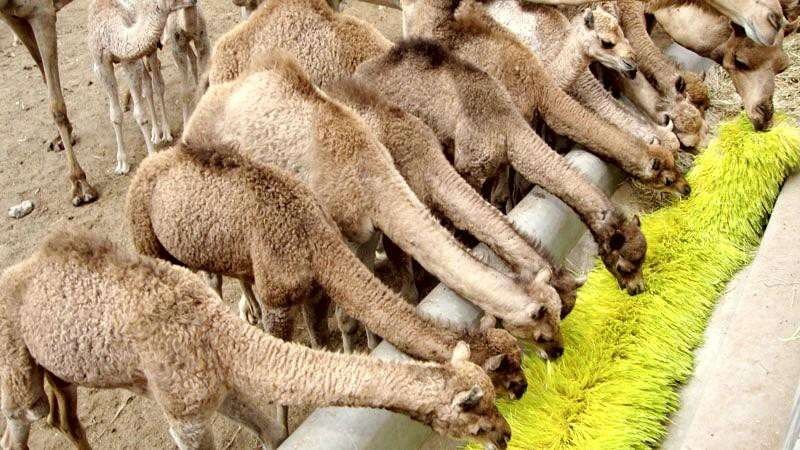
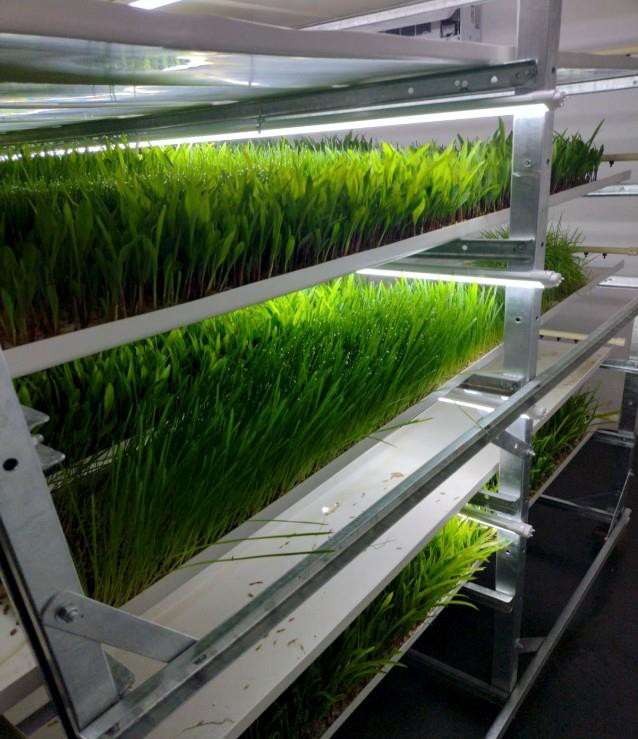
A dedicated hydroponic fodder system for camel yards, racing stables and dairies — growing fresh, sprouted forage year-round in a fully controlled, pesticide-free environment, with a fraction of the water that field forage needs.
Camel Fodder System
Video · Camel Smart Monitoring System — Executive Overview (2:19)
Learn more about the system ↓The Water Question
Where camels are raised, water is the scarcest input of all. Growing forage hydroponically, indoors and on recirculated water, changes the math.
Conventional fodder
270,000 L
of water to produce one ton of conventional field fodder.
Greenfield hydroponic fodder
660 L
of water to produce one ton of fresh hydroponic forage.
Feed Cost
On-site production reduces dependence on purchased and transported forage.
Digestibility
Fresh sprouted forage that the animal can put to work, with little energy spent on digestion.
Water
A recirculating system uses a small fraction of the water that field-grown forage requires.
Clean Feed
Grown without soil or agrochemicals, in a controlled environment.
Health
Greenfield materials report fewer digestive problems, including colic and intestinal ulcers.
Hydration
Fresh forage helps maintain hydration in arid climates and reduces the need for external water.
Why It Works For Camels
Feeding camels with fresh hydroponic forage offers numerous benefits for their health, productivity and overall well-being. Grown without soil or agrochemicals, it is highly digestible and rich in live enzymes, proteins, vitamins and essential minerals such as calcium, phosphorus and magnesium — important for immune function and milk production. Its year-round availability gives camel operations a consistent ration that doesn't depend on rainfall, pasture or imported hay. It is best used as a fresh component of a balanced ration, set with appropriate animal-nutrition advice.
What Really Matters In Animal Feed
In hydroponic green forage (FVH), energy measured as Net Maintenance Energy, Net Gain Energy, Net Lactation Energy and Total Digestible Nutrients tends to stay the same as, or slightly below, the original seed — some energy fuels germination and early growth. But laboratory energy values are calculated, and typically don't fully account for how digestible and available that energy is. Measured energy digestibility in FVH is much higher, so the net energy delivered to the animal is greater than from the original grain. Because the energy is so available, little metabolic energy is spent on digestion, leaving more for growth, work and milk.
Availability
Highly digestible energy sources mean more of the feed's value reaches the animal.
Efficiency
Little metabolic energy is needed to unlock FVH energy, so it works harder inside the animal.
Consistency
A controlled environment keeps moisture, temperature and nutrient content consistent from one harvest to the next.
System Configuration
Frame
Corrosion-resistant aluminum construction built for working yards and stables.
Trays
Safe, easy-to-clean trays sized for consistent, even sprouting.
Irrigation
Combined drip and flood irrigation with an atomizer nebulizer for fine, even moisture coverage.
Water
Recirculated water keeps consumption to a minimum — essential where every liter counts.
Lighting
Full-spectrum LED lighting supports consistent germination and growth regardless of ambient light.
Control
Automated programmable logic control runs irrigation and lighting on a precise, repeatable schedule.
Monitoring
Status reports and alerts delivered to your phone, so the team always knows where the cycle stands.
From Seed To Feed
Download the Camel Fodder brochure, or see how the Camel Smart Monitoring System measures what each camel actually eats.
New › Camel Smart Monitoring System
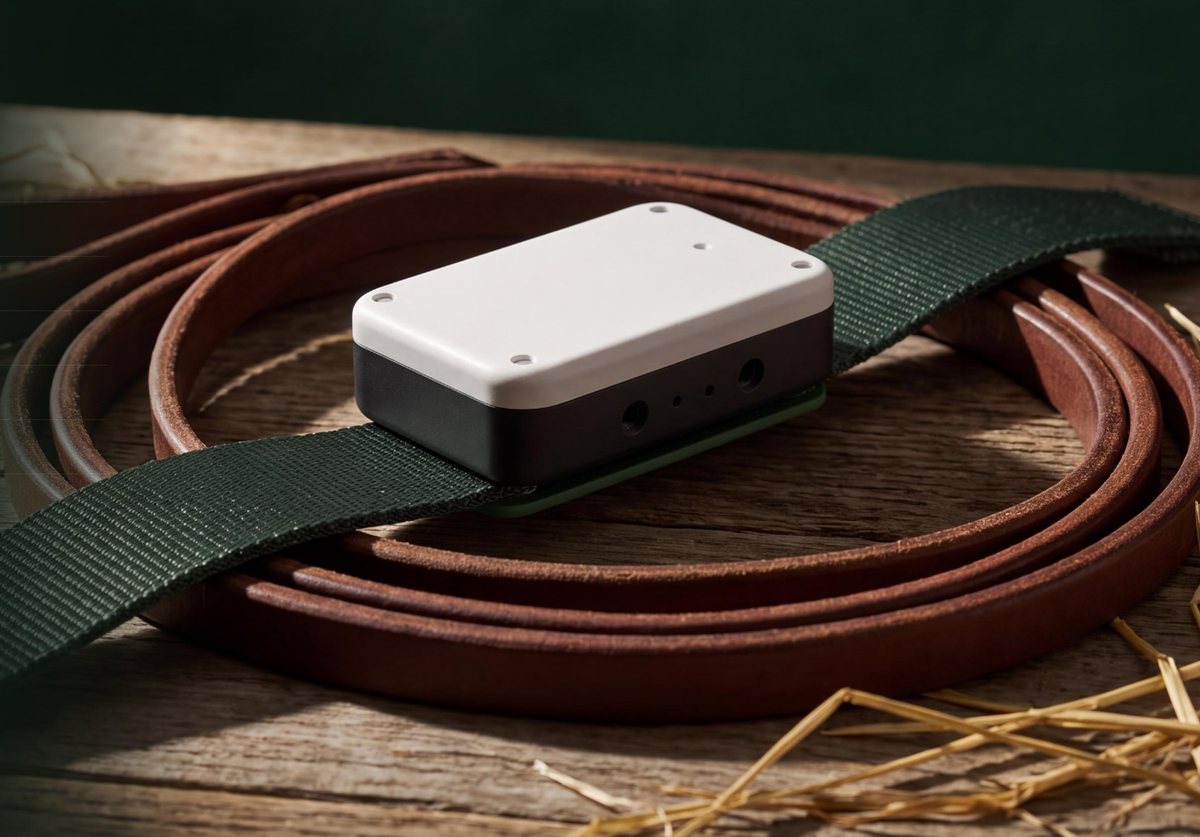
The same system developed for our horse program, fitted for camels. The Camel Core smart collar — built on the Equine Core hardware — works with scale-equipped Smart Feed stations to track how each camel lives, moves and eats, day and night, from the stable to the open range. Compare hay, alfalfa, pellets and fresh hydroponic fodder with real intake data, and catch changes in appetite, activity or rest early.
The Camel Core collar records activity, feeding, rest and GPS location around the clock.
Smart Feed stations with built-in scales measure how much each camel actually eats.
Built-in LTE-M / NB-IoT cellular — no antennas across the range. Stores 72+ hours out of coverage.
Each camel gets its own baseline. Alerts explain what changed and why it matters.
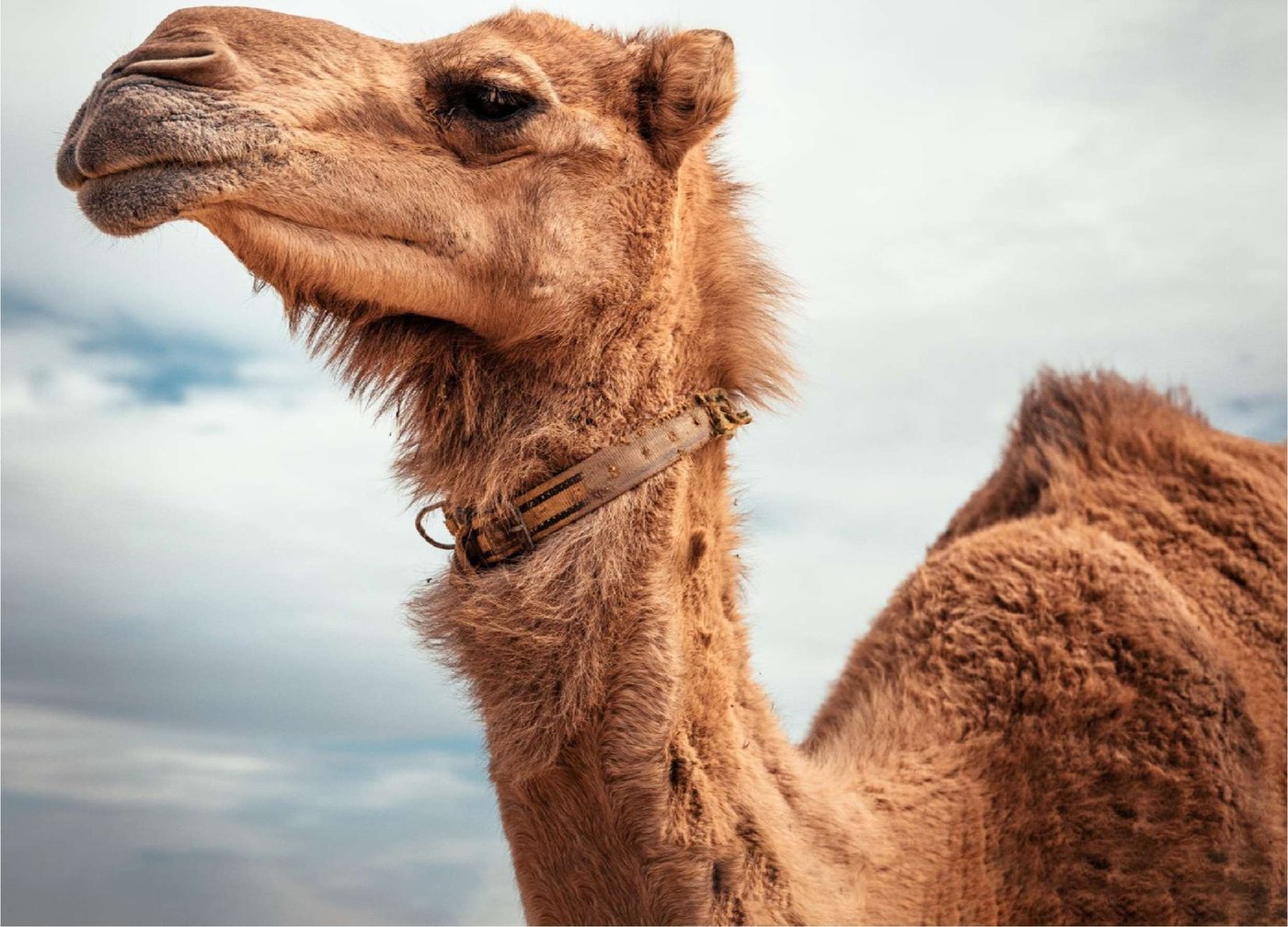
A light 2.6 oz capsule rides high on the neck, facing the sky for strong GPS. A longer, soft-lined strap sized for camels, with a breakaway link.
The collar logs when and how long each camel eats; Smart Feed scales add exactly how much was consumed — ideal for validating a fodder program.
Geofences for free-ranging herds, 72+ hours of storage beyond coverage, and a target operating range up to 122 °F (50 °C).
Camel Core · Specifications
| Size / Weight | 3.1 × 2.1 × 0.85 in · approx. 2.6 oz |
| Connectivity | LTE-M / NB-IoT · GPS · Bluetooth LE |
| Sensors | 6-axis motion (IMU) · device temperature |
| Memory | 72+ hours of data without coverage |
| Battery | Rechargeable · target 14+ days |
| Charging | Magnetic dock, sealed contacts |
| Protection | Target IP67 · −4 °F to 122 °F |
| Fit | Camel-length soft-lined strap, breakaway link |
See the full system in our executive overview, or ask about adding monitoring to your fodder proposal.
Product in development (prototype). The Camel Core uses the Equine Core hardware design; specifications are design targets, pending testing and certification for camel use. Alerts are behavioral observations, not veterinary diagnoses. Device image is an AI-generated rendering based on the device CAD design. Fodder figures are from Greenfield Hydroponics materials; actual results depend on seed, conditions and ration.
Our engineering team will design a customized solution based on the number of camels and daily feed requirements (kg or lbs). Contact us for a complimentary preliminary proposal.