Why A Dandelion, Why Now
An alternative to a rubber tree that only grows in the tropics.
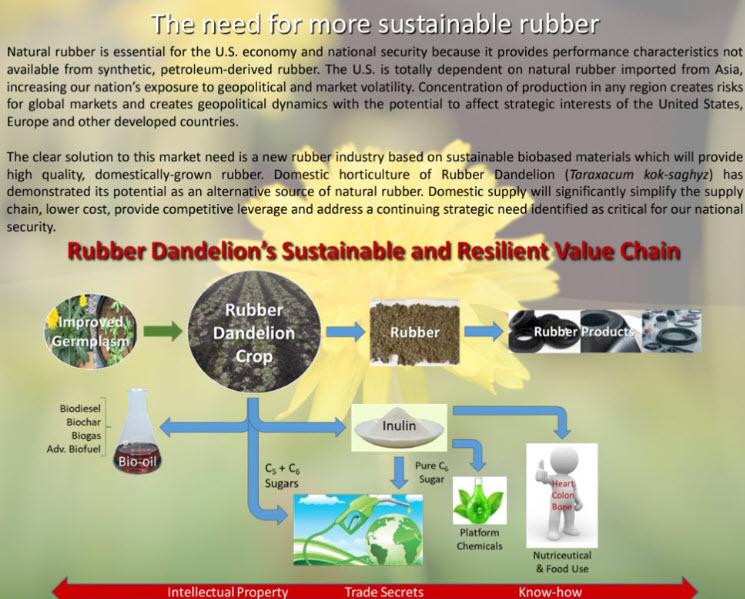
Global rubber demand relies almost entirely on Hevea brasiliensis, a tree that only grows in narrow tropical bands and takes years to mature. TKS is a temperate-climate crop, tolerant of cold, salt and drought, that reaches harvestable rubber content in root tissue on a far shorter cycle — making it one of the most closely watched alternative natural rubber sources in agricultural research today.
Chemistry
Near-Identical Polymer
TKS root latex is built from the same cis-1,4-polyisoprene backbone as rubber tree latex, with a molecular weight that in some studies runs even higher.
Climate
Grows Outside The Tropics
Unlike Hevea, TKS tolerates cold, salt and drought — opening rubber cultivation to regions that could never support a rubber tree plantation.
Growing System
480-Hole Vertical Tower
A 12.5' tower with integrated pump and illumination lets roots develop at a density and consistency a field-grown crop can't offer.
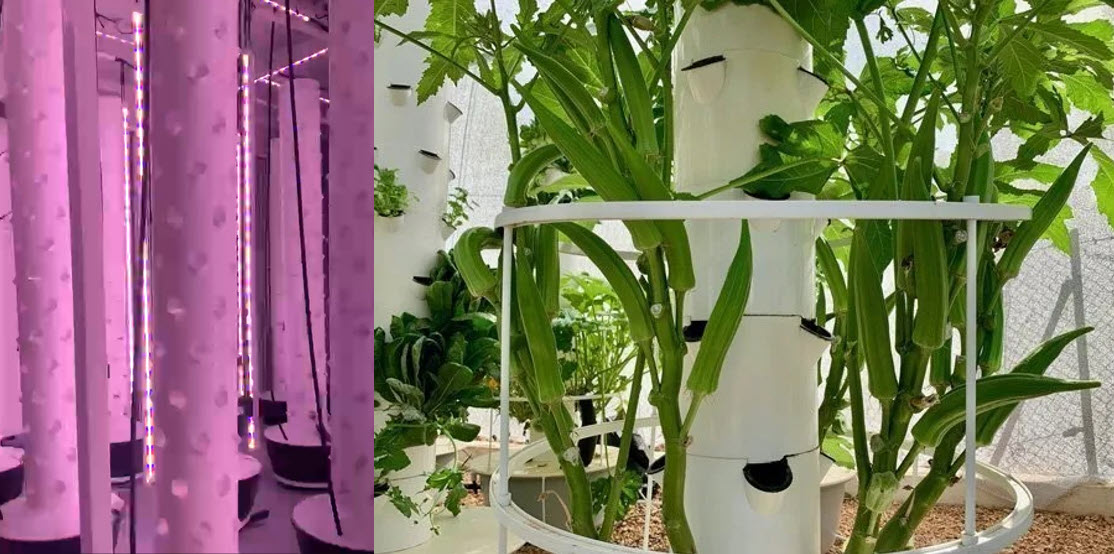 TKS Grow Tower