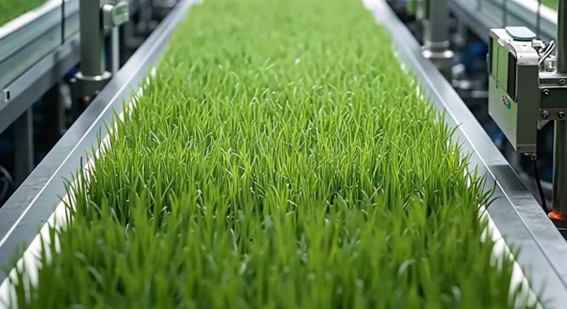
Field-grown forage has to compete for the same water that's getting scarcer everywhere, and it depends on the weather to actually finish a crop. Greenfield's hydroponic fodder system sidesteps both problems at once: a seed goes into a tray, spends seven days germinating under automated irrigation and climate control, and comes out as a dense, ready-to-eat mat — using roughly 90% less water than growing the same forage in a field.
Why the water savings are so large
A conventional forage crop loses most of its water to evaporation, runoff and deep percolation past the root zone long before a plant ever uses it. A hydroponic tray recirculates water directly to the seed bed in a closed, climate-controlled system, so almost everything applied goes into growing the crop rather than into the ground around it. The result is forage that reaches the feed bunk in a week instead of a full growing season, on a fraction of the water a farm would otherwise need to draw from a well, a river or a municipal line.
Nutrition you can control, not just hope for
Because the growing environment is fully controlled, the nutritional profile of the fodder is far more consistent than anything grown outdoors. Total Digestible Nutrients (TDN) for hydroponic barley fodder typically runs 75%–85% on a dry matter basis — noticeably higher than traditional forages like alfalfa hay or corn silage, which usually land in the 60%–70% range. That gap matters most for high-performance animals like dairy cows or beef cattle, where every point of digestibility shows up in milk yield or weight gain.
The variables that move that number are all things a grower can actually manage: water quality, the nutrient mix used, light exposure, and the exact day of harvest. Earlier harvests (around 7 days) tend to run slightly higher in digestibility and TDN than later ones (around 10 days), once the roots begin to lignify. Because Greenfield controls every one of those inputs, the fodder a farm gets on Tuesday looks like the fodder it gets the following Tuesday — something field forage, dependent on rain and soil variation, simply can't promise.
Most operations don't need to add a nutritional supplement on top of the fodder itself — the main addition is a bit of straw mixed in for lignin, which the fresh-cut forage doesn't supply on its own.
Organic by design, not by certification paperwork
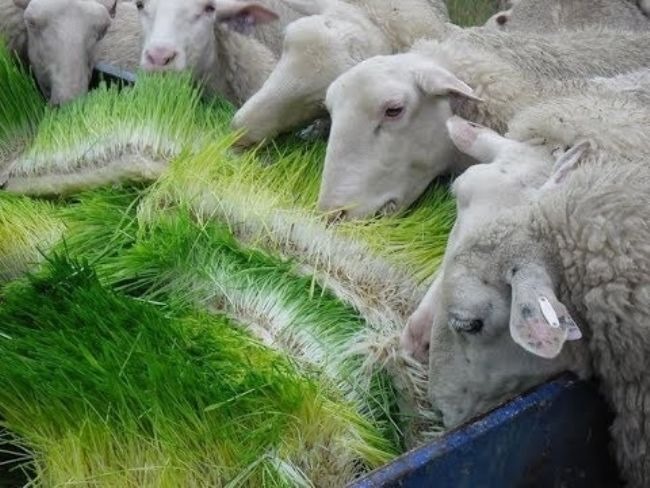
Because the fodder grows in a sealed, soil-free environment with no exposure to field pests, there's no pesticide or herbicide application at any point in the growing cycle — nothing to spray, and nothing for the herd to ingest along with its feed. The same controlled conditions that stabilize nutrition also cut methane output by roughly 60% compared to conventional feed, which is a meaningful number for any operation tracking its environmental footprint alongside its feed bill.
Greenfield also pairs the growing system with ongoing nutritional support: on-site consultation to make sure the fodder ration matches the correct diet for each species, plus monitoring of ration and milk quality so the herd's diet and its output stay connected rather than guessed at.
Zero capital, fresh feed daily
Under Greenfield's Off-Take model, the fodder plant is installed and operated on the farm's property at Greenfield's expense, delivering fresh forage every day under a multi-year agreement. The farm supplies land, utilities and insurance; Greenfield supplies the equipment, the plant operator, and the nutritional oversight that keeps the ration consistent from one week to the next.