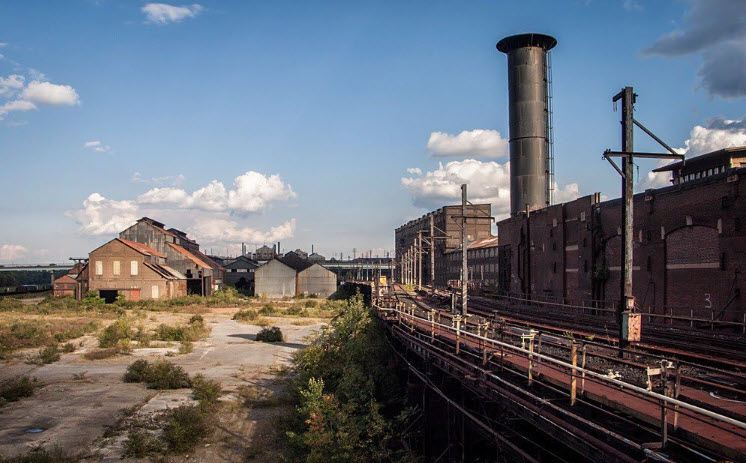
What is a brownfield?
Not every vacant lot is a brownfield, but the common examples are familiar: abandoned gas stations, scrap yards, unsafely demolished structures, former manufacturing plants, strip malls with dry cleaners, vacant rail and truck yards, old smelters and foundries, and closed fuel depots. Contamination drives cost and liability, and while federal cleanup grants exist, growing food doesn't have to wait for them.
Case study: from steel to soil
Bethlehem Steel in Bethlehem, Pennsylvania was a 1,800-acre steelmaking complex that sat idle and contaminated for decades after its last furnace shut down in 1995. In 2015 its ore trestle reopened as an elevated public greenway — heavy-industrial land returned to people-facing use. Above-ground cultivation lets sites like this grow food years before soil remediation is complete.
Agriculture for the future
- Population is projected to grow from 7.8 billion today to 9.7 billion by 2050.
- Food output must rise by up to 70%.
- Conventional practice would need 20% more land.
- Climate extremes are already cutting yields.
Brownfields close that gap: they are already cleared, serviced and close to the people who need the food, so they add growing capacity without converting another acre of wild or farm land.
Why grow above the ground?
If the soil can't be trusted, take the crop off the soil. Raised beds with clean imported soil, hydroponics and aquaponics, vertical and container systems on hardstand, parking decks and rooftops, and greenhouses all keep roots away from contaminated ground — with no wait for remediation.
Our growing systems
| Grow Tower | 6P7, 6P10 and 6P15 sizes with 42, 60 or 90 plant holes; optional rack, pump and LED; indoors or outdoors |
|---|---|
| ZIP System | Single- or double-sided for leafy greens, with water supply and LED included in a compact vertical footprint |
| NFT Channels | Laminar nutrient flow for high-quality, short, continuous harvest cycles |
| Microgreens | 3-1 through 7-3 formats, 20–150 kg daily output, harvest in 7–14 days |
The systems are modular, combining to match site size, crop mix and available power.
Towers need only a clean water source, an electrical outlet and sunlight or grow lights. Over 200 vegetable, herb and flower varieties are tower-compatible.
Water independence
Atmospheric water generators condense potable water from the humidity in the air, so a site needs no mains connection and no well permit. Water is produced where it's used, eliminating haulage and distribution cost, and each installation runs on its own — drought restrictions and main breaks never stop production.
Bring us a site. We'll assess it, size the system, install it and train your crew — and start growing clean food without waiting years for the soil.